
How ADA Shower Guidelines Changed Accessible Housing Across North America
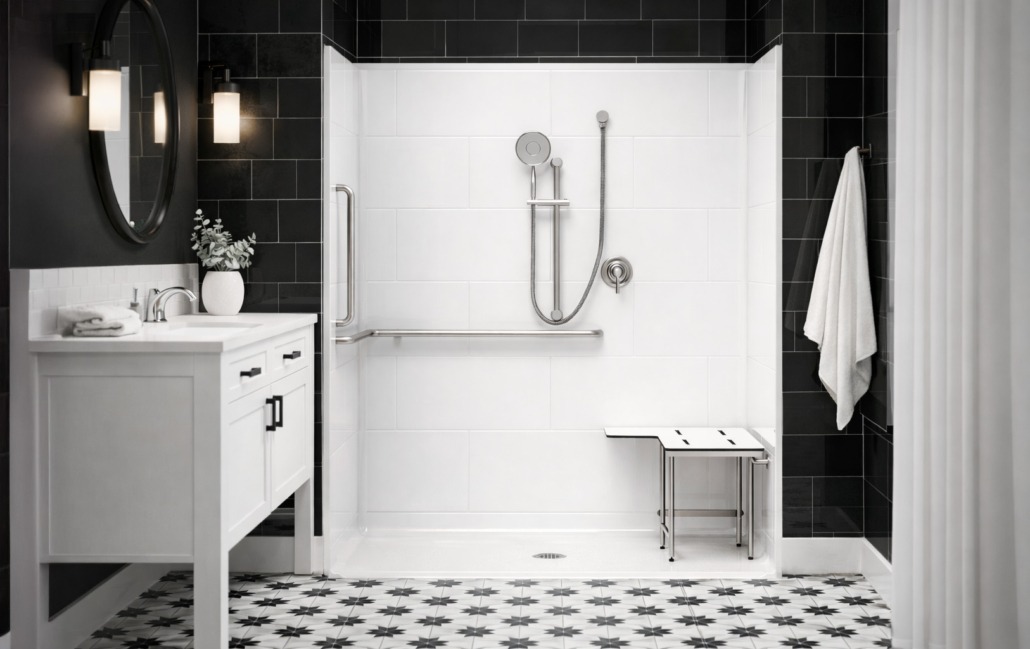
A Case Study in Barrier-Free Shower Design for Seniors and Affordable Housing
When the Americans with Disabilities Act (ADA) introduced accessibility standards in the early 1990s, it fundamentally changed how architects, housing providers, and facility managers approached shower design across North America.
Although developed as U.S. regulations, ADA shower guidelines quickly became the benchmark for accessible shower systems in seniors housing, affordable housing, assisted living facilities, multi-family residential developments, aging-in-place renovations, and barrier-free retrofit projects.
Today, many Canadian housing providers still reference ADA principles because they offer practical, proven standards for creating safer and more functional shower environments.
At Affordable Housing Showers, we continue to see ADA-driven design principles shape accessible housing modernization projects throughout Canada and the United States.
The Accessibility Challenges Before ADA Standards
Before modern accessibility standards, most residential and multi-family shower systems were designed around conventional bathtubs and raised shower curbs. These layouts created serious barriers for seniors, wheelchair users, residents using walkers, mobility-impaired tenants, and assisted bathing environments.
Common issues included high shower thresholds, tight maneuvering space, slippery surfaces, poorly positioned controls, lack of reinforced grab bar support, and inadequate transfer clearances.
For housing providers, these limitations often led to increased fall incidents, higher liability exposure, greater caregiver assistance requirements, and costly retrofits.
ADA Guidelines Introduced Measurable Accessibility Standards
One of the ADA’s most important contributions was replacing vague accessibility concepts with clear technical standards for shower design.
The guidelines established specifications for threshold heights, roll-in shower access, interior shower dimensions, transfer clearances, grab bar placement, shower seating, and reach ranges for controls.
These standards became the foundation for the modern barrier-free shower systems now widely used across North America.
Low-Threshold Entry Became a Game Changer
Among the ADA’s most influential requirements was limiting shower threshold height. ADA guidelines specify that accessible shower thresholds should not exceed 1/2 inch, or 13 mm.
That seemingly small detail had a major impact. Even minimal vertical transitions can create hazards for wheelchair users, residents using walkers, seniors with balance limitations, and anyone at increased risk of falls.
For housing operators, low-threshold shower systems improve resident independence, safety outcomes, accessibility compliance, and caregiver access.
Interior Shower Dimensions Became Essential
Prior to ADA guidance, many showers were simply too small to safely accommodate mobility-impaired residents.
ADA standards established minimum interior dimensions that support wheelchair maneuverability, safer transfers, assisted bathing, and better resident positioning.
Roll-In Shower Standards
ADA roll-in showers typically require minimum dimensions of 60 inches by 30 inches, open-entry access, and minimal or no threshold obstruction.
Transfer Shower Standards
ADA transfer showers generally require minimum dimensions of 36 inches by 36 inches, integrated accessible seating, reinforced grab bar placement, and reach-accessible controls.
Slip Resistance Became a Core Safety Priority
ADA accessibility standards also highlighted the importance of slip-resistant shower surfaces — a critical consideration in seniors housing, where wet surfaces remain a leading cause of fall-related injuries.
Modern accessible shower systems commonly include slip-resistant shower pans, textured flooring surfaces, proper drainage slopes, and commercial-grade waterproofing systems.
Reinforced Grab Bar Systems Improved Safety
Older residential shower assemblies were rarely designed to support load-bearing grab bars, assisted transfers, or mobility stabilization.
Today’s accessible shower systems typically incorporate reinforced wall backing, strategically positioned grab bars, and commercial-grade support assemblies.
Accessible Controls Increased Resident Independence
ADA shower guidelines also standardized control accessibility and ease of use.
This accelerated the adoption of lever-operated controls, pressure-balanced valves, anti-scald protection, handheld shower systems, and accessible reach ranges.
ADA Standards Influenced Accessible Housing Across Canada
While Canada maintains its own accessibility frameworks, ADA shower guidelines have significantly influenced accessible housing design nationwide.
Many Canadian housing providers reference ADA principles when developing barrier-free shower systems, seniors housing retrofits, aging-in-place renovations, affordable housing modernization projects, and accessible multi-family developments.
Accessible Shower Design Is Now Essential Infrastructure
Accessible shower systems are no longer viewed as optional upgrades — they are now considered essential infrastructure in modern housing.
Housing providers increasingly recognize that barrier-free shower systems support aging-in-place initiatives, resident retention, reduced liability exposure, lower maintenance costs, and improved long-term building performance.
The Future of Accessible Shower Design
ADA shower guidelines transformed accessible housing by prioritizing safety, durability, independence, maneuverability, and long-term usability.
Today’s housing providers are moving beyond minimum compliance and investing in shower systems that deliver better resident outcomes, lower operational risk, improved maintenance performance, and greater accessibility flexibility.
At Affordable Housing Showers, we specialize in durable, low-maintenance barrier-free shower systems designed specifically for seniors housing, affordable housing, multi-unit residential properties, assisted living facilities, and aging-in-place projects.
Our focus is helping housing providers across Canada and the United States implement accessible shower systems built for long-term performance and evolving resident needs.
Learn more at:
www.affordablehousingshowers.com
Related Articles
Need Help Specifying the Right Shower System?
Our team works with developers, architects, and project teams to help match products to your application.
Contact Our Team